
Whip Use
Community expectations of animal welfare continue to evolve at a rapid rate - particularly with regards to racing animals.
Without doubt the highest profile issue relates to the use of the whip in racing pursuits.
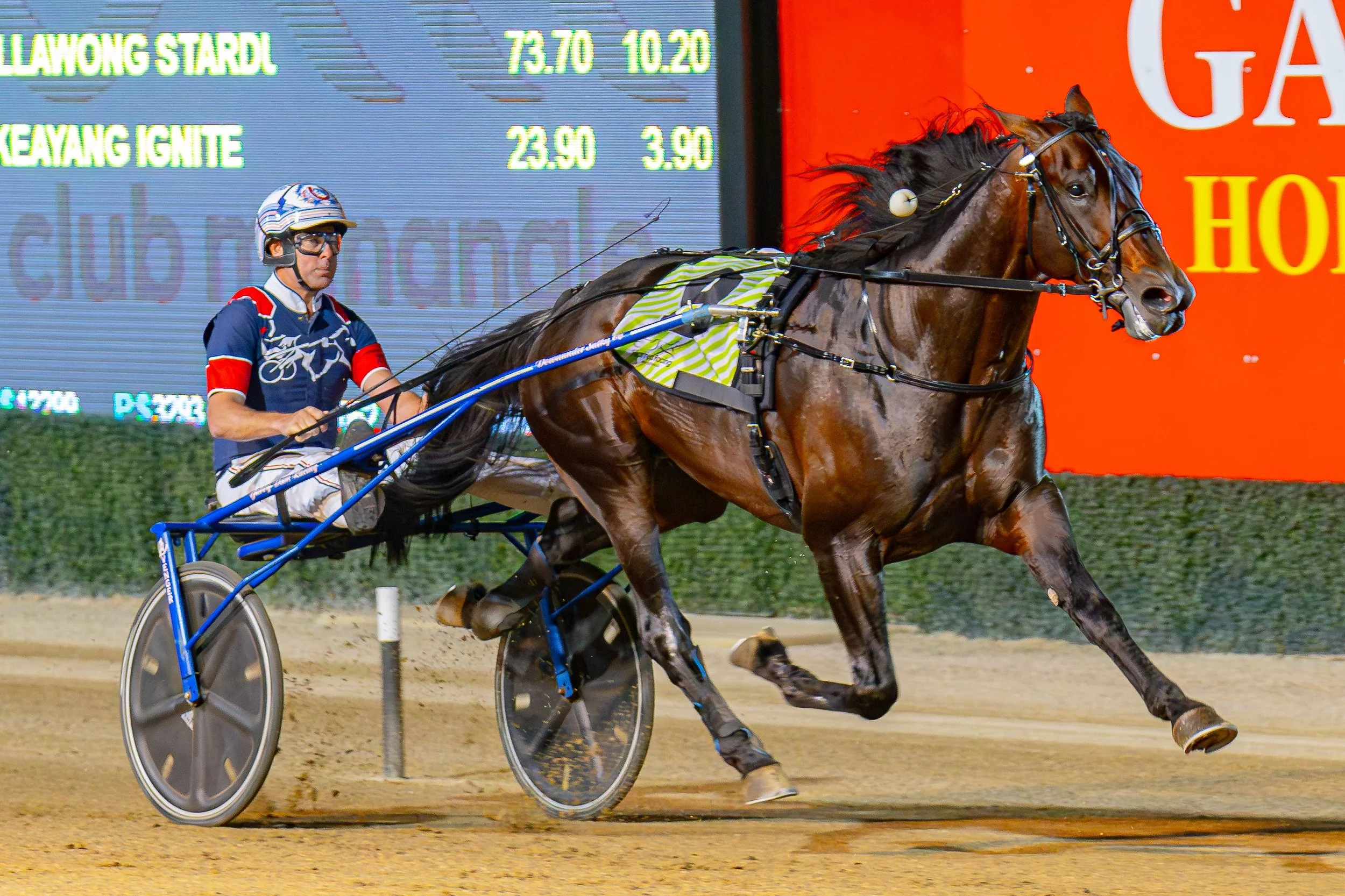
Harness racing is unique in that the communication between horse and human must take place at a much greater distance than in traditional ridden horse sports.
Without the capacity to use their seat or legs, drivers have only their hands and voice to ask the horse to slow down, speed up or change direction. Whilst a long whip may be visually jarring to some, in reality the length is needed to reach the horse’s hindquarters, where it can be used to keep the horse’s concentration, indicate faster or even help to straighten them if they veer off course. Many drivers will also tap their whip on the sulky shafts, with the noise being another cue for the horse without any physical contact being made.
HRA (through its members) first made a proactive decision to moderate the use of the whip back in 2010 by implementing a rule which effectively reduced the driver’s whip action to a wrist and elbow flick.
This new rule also attempted to define the term 'excessive whip use' in order to provide industry participants with some direction and examples/circumstances in which they would be deemed to be in breach of the rule (previously it was a generic open-ended phrase).
While many drivers found the change initially difficult, over time the use of the whip has improved markedly without impacting on horse or driver performance - indeed race times have actually become faster in the period since the whip changes were introduced.
However, as community expectations continued to evolve, HRA members again reviewed a number of equine welfare regulatory controls and agreed the time had come to further moderate the whip rule, with a modification in 2016 further tightening the 2010 rules and providing improved clarity for drivers as to their obligations whilst using the whip.
Further modification was then instilled from 1 September 2018 which limited whip use to a forward flicking motion only in an action which does not engage the shoulder. This modification was a logical progression from the previous one but did present some challenges for both drivers adhering and stewards policing the rule as an 'action which does not engage the shoulder' can be somewhat open to interpretation and drivers heights, gender and preferred position in the sulky all contribute to slight variations in whip action, shoulder angles and engagement.
The most recent modification came into place on 1 September 2020 and limits use to a wrist only flicking motion. The wrist only flicking motion is designed to limit the force with which a whip can be applied whilst still allowing its principal use as a means of communication between the driver and horse. The limitation of force, both perceived and actual, is the crux of these latest amendments.
This modification makes Australian harness racing one of the strictest in the world for whip use rules. Currently Norway is the only country that operates completely whip free however there are a number of European countries who also continue to strongly moderate whip usage in the face of increasing government pressure.